
What to automate first with AI agents in a service business
Learn how to identify high-ROI, low-risk automation opportunities for your service business by focusing on repeatable tasks and maintaining human oversight.
By 5050AI ·
Key takeaways
- Prioritize tasks that occur frequently with minimal variation to ensure reliable agent performance.
- Target processes consuming at least five hours of team time per week to realize measurable ROI.
- Maintain a human-in-the-loop requirement for all external-facing communication to protect brand reputation.
- Automate specific process steps rather than entire workflows to maintain operational control.
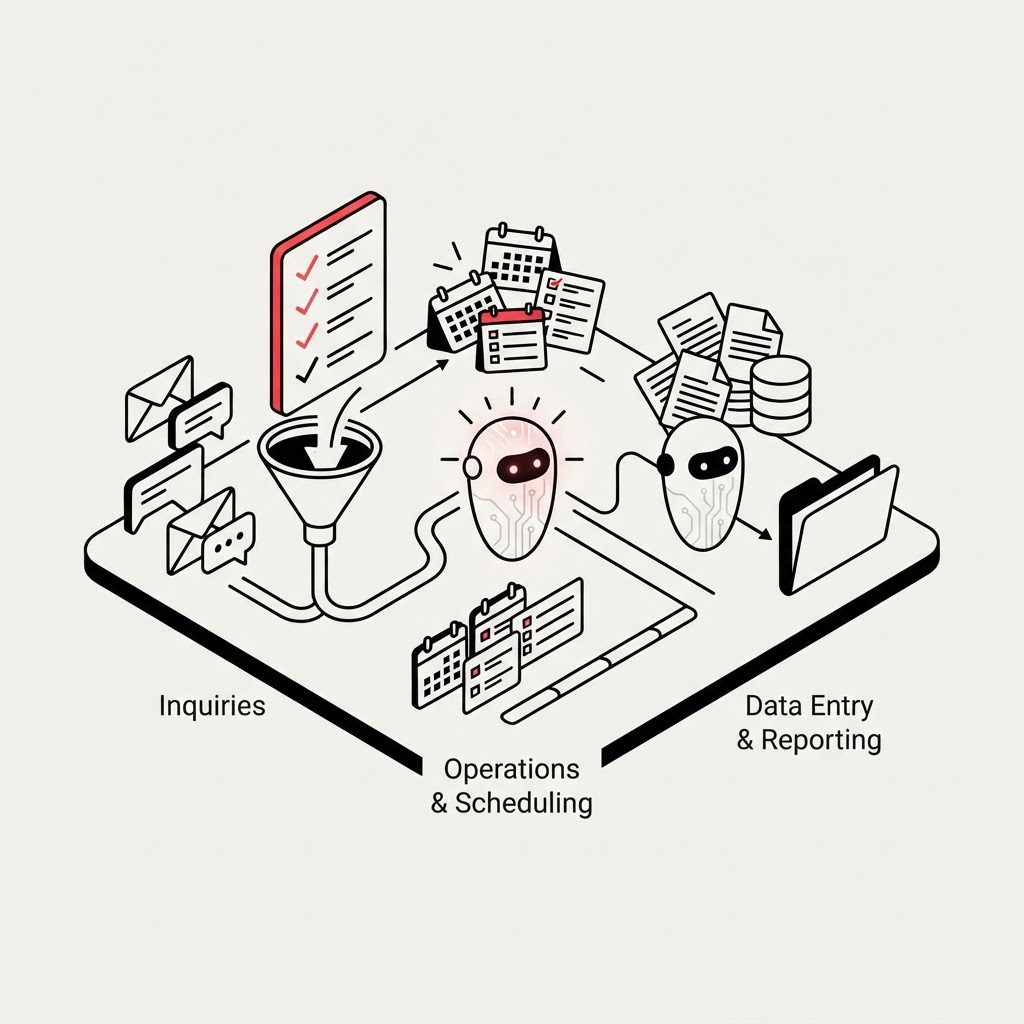
If you are ready to integrate AI agents into your service business, the primary goal should be identifying tasks that offer high reliability and significant time savings. The best tasks to automate first are those performed most frequently with the least amount of variation (Sherise Adkins). Processes that are highly variable or involve nuanced judgment are poor candidates for early-stage automation because they often require human context that agents cannot reliably replicate.
Identifying the Low-Hanging Fruit
When evaluating your operations, prioritize tasks that consume significant team time—ideally five or more hours per week—to ensure a clear return on investment (CloudMotiv). For service businesses, this often manifests as high-volume, low-nuance repeat questions in customer service, such as status updates or standard policy inquiries (Dante AI). By shifting these repetitive tasks to an AI agent, you free your team to focus on higher-value client interactions. You can learn more about how to refine your selection process in our guide on how small businesses can pick their first AI agent.
The Human-in-the-Loop Principle
While AI agents can manage data entry or internal scheduling with high precision, tasks involving public communication or those that represent the business externally should maintain a human gate (Sherise Adkins). Automating outreach or critical client responses without oversight introduces unnecessary risk. Always ensure an agent operates within a defined scope where it provides information or drafts responses for review, rather than acting as the final authority on external communications.
Prerequisites for Successful Automation
Automation is not a magic fix for disorganized processes. If a process cannot be described in writing or lacks a clear, repeatable structure, it is not ready for an AI agent (Sherise Adkins). Before deploying an agent, document the exact steps of your current workflow. If your team cannot agree on how the task should be performed, an AI agent will only amplify that inconsistency.
Strategies for Low-Risk Deployment
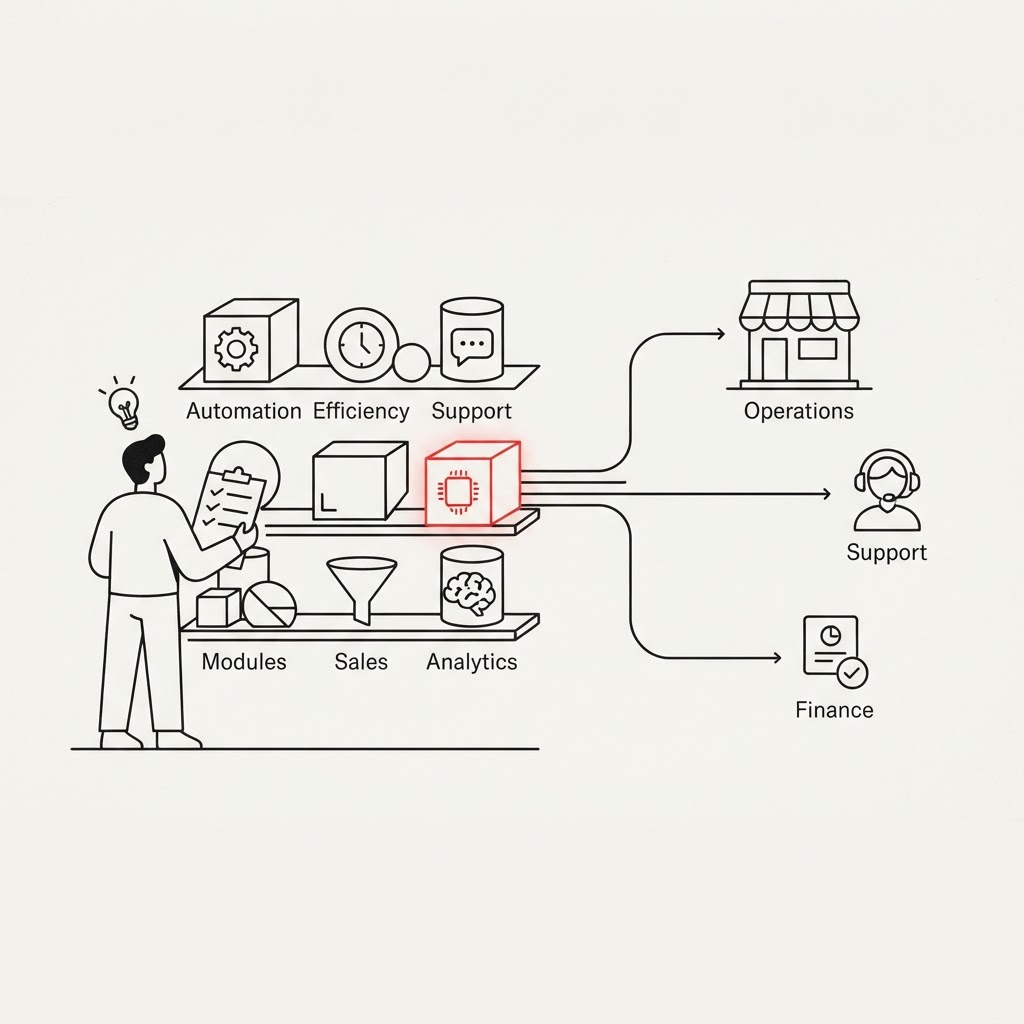
Avoid the temptation to automate an entire end-to-end process at once, as this is considered high-risk (CloudMotiv). Instead, adopt a modular approach. Use AI agents for specific, well-defined steps within a broader process while maintaining deterministic rules for the remainder of the workflow (CloudMotiv). This allows you to monitor agent output for quality and accuracy without jeopardizing your core business operations. By keeping the logic simple and the scope narrow, you create a foundation for scaling your automation efforts over time.
Frequently asked questions
Should I automate my most complex service tasks to save the most time?
No. Complex tasks often lack the repeatable structure necessary for AI to function reliably. It is better to start with high-frequency, low-variation tasks to ensure the agent performs consistently before attempting to automate more complicated workflows.
How do I know if a process is ready for an AI agent?
A process is ready for automation only if you can document it in writing as a series of clear, repeatable steps. If the process requires constant improvisation or has no standard procedure, it should remain manual until it is standardized.
Sources
Related
How small businesses can pick their first AI agent
Learn how to select a reliable AI agent for your small business by focusing on standardized architectures, essential safety features, and targeted pilot projects.
By 5050AI