How small businesses can pick their first AI agent
Learn how to select a reliable AI agent for your small business by focusing on standardized architectures, essential safety features, and targeted pilot projects.
By 5050AI ·
Key takeaways
- Prioritize agents with durable state, human-in-the-loop controls, and MCP-based tool access.
- Target a single departmental pilot project rather than company-wide transformation to accelerate ROI.
- Budget between $10,000 and $50,000 for professional consulting to ensure a reliable implementation.
- Ignore market hype around adoption rates; focus on solving specific operational bottlenecks.
Selecting an AI agent for your small business requires moving past the buzzwords to focus on architectural reliability. In 2026, the industry reached a significant milestone as five major AI agent frameworks converged on a standardized architecture [2]. This convergence prioritized specific technical standards that make agents predictable enough for business use, moving them from experimental toys to functional operational tools.
Understanding the Current State of AI Agents in 2026
What defines an agent?
Unlike basic chatbots, an AI agent is designed to execute multi-step workflows independently. The current standard for these systems relies on a graph-based execution model, which allows the agent to navigate complex tasks by mapping out decision paths rather than simply predicting the next word in a sentence [2].
The move toward standardized frameworks
This architectural shift ensures that agents maintain consistency during long-running tasks. By adopting these framework standards, small businesses can now deploy technology that is far more resilient to errors than the early models that dominated the market just a few years ago [2].
Non-Negotiable Features for Your First AI Agent
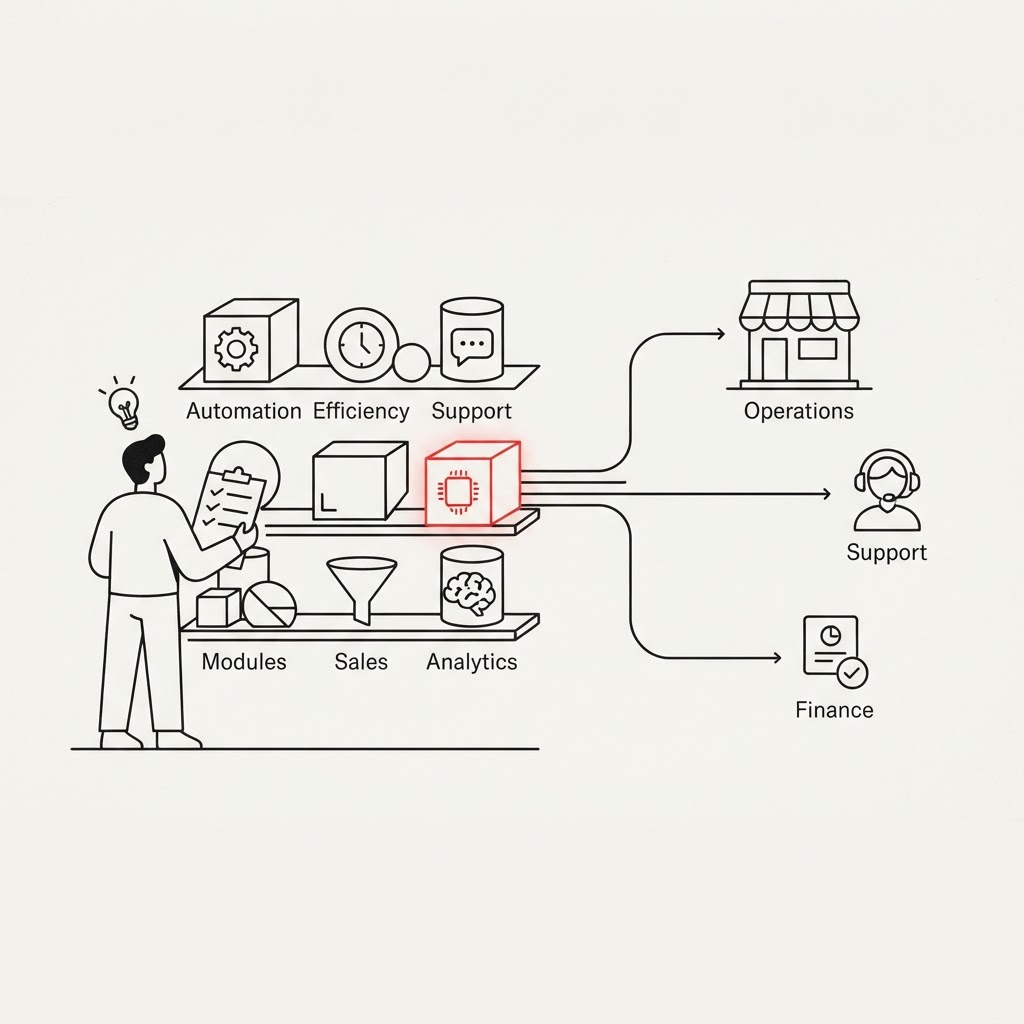
When evaluating potential solutions, insist on three core capabilities that protect your operations:
- Durable state: The agent must be able to remember its progress. If a process is interrupted, the agent should resume exactly where it left off, rather than restarting and potentially duplicating work [2].
- The human-in-the-loop requirement: For any action that carries risk, a mandatory approval step is essential. This gives your team a "kill switch" to review the agent's work before it commits to an action or sends external communications [2].
- MCP-based tool access: Your agent needs to interact with your existing software suite safely. Model Context Protocol (MCP) standards allow for secure, structured access to your tools, ensuring the agent uses your data as intended [2].
Budgeting and Deployment Strategy
Typical consulting costs
Most small businesses find that professional guidance is necessary to integrate these agents effectively. Initial consulting engagements typically range from $10,000 to $50,000 [3]. While this is a notable investment, basic assessments to identify the highest-impact workflows are often available at a lower entry cost [3].
Starting with pilot projects vs. full-scale
Do not attempt to overhaul your entire company at once. The most effective path to positive ROI is starting with a focused pilot project in one specific department [3]. This approach allows you to measure performance, refine the agent’s instructions, and build confidence before scaling to other areas of the business.
Navigating the Adoption Landscape
Why adoption statistics vary
You may encounter conflicting data regarding how many small businesses are currently using AI, with adoption rates appearing to range anywhere from 24% to 76% [1]. These wide gaps are largely due to how different studies define "AI" and how they select their participants [1].
Setting realistic expectations for your business
Market penetration statistics are poor indicators of whether an agent will work for your specific business. Rather than benchmarking your progress against industry surveys, prioritize solving a specific pain point—such as document processing or lead triage—where the agent’s performance can be objectively measured. By focusing on utility over trends, you position your business to gain genuine efficiency.
Frequently asked questions
What is a graph-based execution model?
It is a technical architecture that allows an AI agent to plan and execute tasks as a sequence of connected nodes, making the agent's decision-making process more transparent and easier to manage than traditional linear models.
Does my business need specialized engineering talent to use these agents?
While frameworks have become more standardized, most small businesses benefit from working with consultants to set up, monitor, and maintain the agent's workflow, especially when integrating with proprietary business tools.
Related
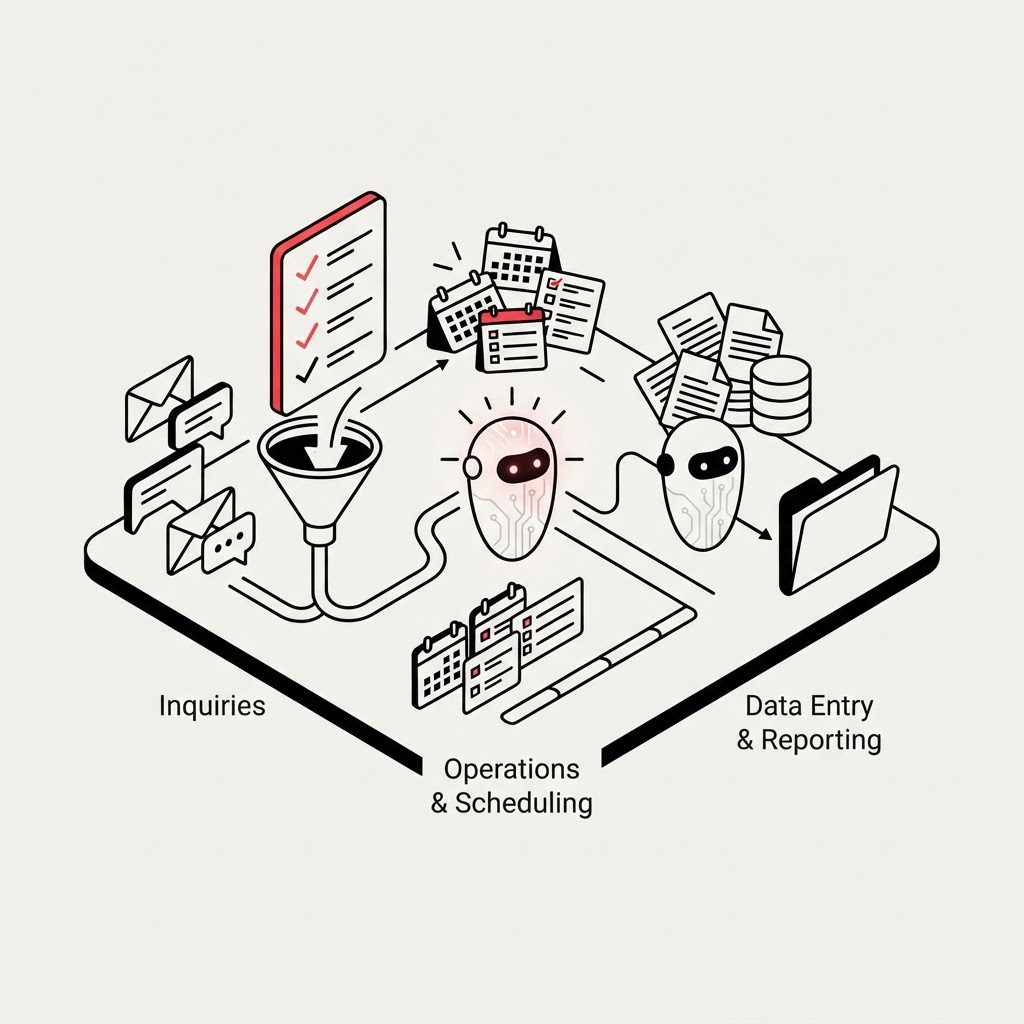
What to automate first with AI agents in a service business
Learn how to identify high-ROI, low-risk automation opportunities for your service business by focusing on repeatable tasks and maintaining human oversight.
By 5050AI